
Dutch Ancestry Private Tour. Your Dutch Hometown visits
Dutch Ancestry Private Tour | By Van | Max 7 Passengers | Personal & Flexible –
Price €100 or $120 per hour per group.
My private tour includes a drive to your ancestral hometowns.
A guided journey through your Dutch roots.
10 reasons to book my Dutch Ancestry Private Tour for Heritage Seekers:
| My tour as and a bridge between your American life and your Dutch roots: | I will be your partner to help to find your ‘Dutch place’. |
| I can help your family finding the specific village or house where your ancestors lived: | Together we can map out your ancestral locations before you arrive and take you directly to the town, the street, or the church where your family history was made. |
| Together we will do research before booking your tour: | The more specific details are provided (names, dates, birth villages), the better we can prepare a truly meaningful itinerary. |
| We will visit the local church or cemetery to find family names: | I can help you gain access to local cemeteries and, where possible, coordinate with local parish contacts to see if records or markers are available. |
| My private van tour is better than taking a train for an ancestry tour: | Ancestral villages are often in the remote countryside. My private van allows us to drive down the exact roads your ancestors walked, stopping whenever you need to reflect or take photos. |
| The town has changed completely or the old house is gone: | Even if the physical home is gone, I’ll help you understand the context—the landscape, the industry of that town, and the life your ancestors led. It’s about the experience, not just the building. |
| If there is a language barrier if we need to ask locals about your family history: | Your driver/guide is your local bridge. If we encounter a local resident or a town archivist, I can help facilitate that conversation for you. |
| The private Dutch Ancestry Tour is set at your own pace: | This is your day. If you need 30 minutes in a quiet cemetery or an extra hour at the local town hall, the schedule is completely flexible. |
| This tour is appropriate for elderly family members or children: | We want the youngest and oldest family members to participate comfortably. My private van is the perfect ‘mobile base.’ It’s climate-controlled and accessible, allowing family members to stay comfortable while exploring specific locations. |
| My ancestry tour is a driving tour, but we will actually walk the streets your ancestors walked: | We use the van to get us to the heart of the region, but the day is spent on foot, exploring the neighbourhoods, the churches, and the town squares. |
Welcome home! Or, as we say in Dutch, Welkom thuis!
There is a specific kind of magic that happens when an American traveler touches down in the Netherlands. Not just to see the sights, but to walk the ground their ancestors once tilled. Whether your family left from the harbour of Rotterdam in the 1920s or sailed on a wooden ship from Amsterdam in the 1600s, my Dutch Ancestry Private Tour is about turning names on a genealogy chart into a three-dimensional reality.
As your tour guide, private driver and “heritage detective,” I’m here to help you bridge the gap between “then” and “now.”
Here is how we are going to spend our Dutch family history tour finding your family history in the polders and provinces.
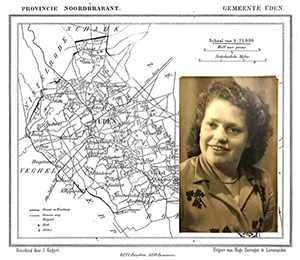
From a ‘tour’ into an ancestry consulting experience
Before you book, I will offer a complimentary email review of your ancestral information. I will let you know upfront if your family village is accessible and help you create a ‘Rooted’ itinerary that connects you to your heritage.
The Dutch Ancestry Private Tour Advantage: Precision over Proximity
Genealogy isn’t a “one size fits all” hobby. A standard tour bus will take you to the famous sights, but it won’t take you to that one specific church in a tiny village in Friesland where your great-great-grandfather was baptized.
With a Private Tour, we have the “Ancestry Toolkit”:
• The Deep Dive: We aren’t just looking at a province; we are looking at a specific street address.
• The Archives: If we’ve pre-arranged it, we can visit local “Streekarchieven” (Regional Archives) where the original handwritten ledgers still exist.
• The Living Connection: Sometimes, we even find a local with the same last name. There’s nothing quite like meeting a “tenth cousin” over a cup of coffee.
Understanding the “Why” of the Departure
Most of your ancestors didn’t leave because they didn’t love the Netherlands; they left because of the Polder Economy.
In the 1800s, the Netherlands faced “land hunger.” With large families and limited space, only the eldest son could inherit the farm. The younger siblings faced a choice: work as laborers for pennies or take a chance on a boat to New York, Michigan, or Iowa.
When we stand in the middle of a flat, green field today, I want you to look at the horizon. Your ancestor stood exactly here and realized that if they wanted to own their own horizon, they had to cross the ocean to find it.
The “Paper Trail” Logic
For my Americans who love data, Dutch record-keeping is a dream. Because of the Napoleonic Code introduced in 1811, our “Burgerlijke Stand” (Civil Registry) is incredibly detailed.
If we know the year your ancestor left, we usually look for three things:
1. Doopboeken (Baptism records): For anyone born before 1811.
2. Bevolkingsregister (Population registers): These tell us exactly who lived in the house, their occupation, and even if they moved to another town.
3. Kadaster (Land records): This allows us to find the footprint of the actual house or barn.
Visiting the “Mother Towns”
Depending on where your family is from, our day will take us to very different landscapes.
The Maritime South (Zeeland & Rotterdam)
If your ancestors were from this part of Holland, we’ll visit the Red Star Line Museum in Antwerp (just across the border) or the Holland America Line headquarters in Rotterdam. Standing on the “Wilhelminapier” is a heavy experience—it was the last piece of European soil thousands of families ever touched.
The Religious North (Friesland & Groningen)
Many Americans with names like Vanderbilt, Springsteen or Dykstra come from the northern clay lands. These areas were deeply religious and often “Seceded” from the state church, leading whole congregations to move to America for religious freedom. The villages here are quiet, circular, and built on “Terpen” (man-made mounds) to stay dry.
The Artisan East (Overijssel & Gelderland)
If your family were weavers or craftsmen, we’ll visit the brick-and-timber towns near the German border. The architecture here is “Saxon”—sturdy, cozy, and built to withstand the inland winters.
The “Dutch Identity” Check-In
You might find that your Dutch-American traditions back home are a bit different from what you see today.
| Tradition | In the U.S. | In the Netherlands today |
| The “Dutch Treat” | Splitting the bill perfectly. | Still true! We are a practical people. |
| Clogs (Klompen) | Decorative items on a shelf. | Still used by farmers! They are warm and waterproof. |
| Directness | Sometimes seen as “blunt.” | It’s considered “Honesty” (Eerlijkheid). It’s how we show we care. |
| Religion | Often the center of the community. | Most Dutch people today are secular, but the old churches remain the town centers. |
Culinary Heritage: Tasting Your Roots
We’re going to eat the food your ancestors would recognise.
• Stamppot: Mashed potatoes mixed with kale or carrots, served with a smoked sausage. This was the “fuel” of the Dutch farmer for centuries.
• Pannenkoeken: Huge, savory pancakes. Your great-grandmother likely made these on a cast-iron skillet.
• Jenever: The original Dutch gin. If your ancestor was a sailor, he definitely had a “kopstootje” (a beer and a tulip-glass of Jenever) at the local tavern. We should probably do the same, for “research purposes.”
Dutch Ancestry Private Tour: Practical Tips for Heritage Seekers
• The Name Game: Names changed at Ellis Island. Van der Meer became Vandermeer. Bakker became Baker. I’ll help you reverse-engineer the “Americanised” version back to the original Dutch spelling.
• The “Graveyard Reality”: Unlike in the U.S., Dutch graves are often “leased.” After 20 or 30 years, if the family doesn’t renew the lease, the headstone is removed. Don’t be disappointed if we can’t find a headstone from 1850—we will find the record of where they were buried instead.
• Comfort is Key: Heritage tours involve walking through old churchyards and uneven cobblestones. Wear sturdy, waterproof shoes.
Closing the Circle. Private Tour to Dutch Roots
The most powerful moment of these tours usually happens in a quiet moment. It’s when you’re standing in a village square, hearing the same church bells your ancestor heard, and realising that while they left, a part of them never did.
You aren’t just a tourist today; you are a returning member of the tribe. You carry their DNA, their work ethic, and maybe even their stubbornness. My job is just to hold the map while you find the way back to them.
Ready to start the research?
I will have the local maps and the archives bookmarked. Before we set off, do you have a copy of that old ship’s manifest or a specific family name that has been passed down through the generations?
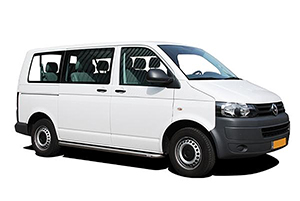
VW T5 or Opel Vivaro 8 Seats Van:
The cabin interior is spacious.
For private Dutch ancestry tours for 1 up to 8 passengers.
Euro 6 engine – low emission vehicle.
Dual-zone climate control.
USB charging ports.
Luggage space for 8 standard suitcases.


Private Tour Holland – Utrechtsedwarsstraat 29 – NL 1017WB Amsterdam – VAT Tax ID BSN KvK 0204 43 961- txt: +31616799517